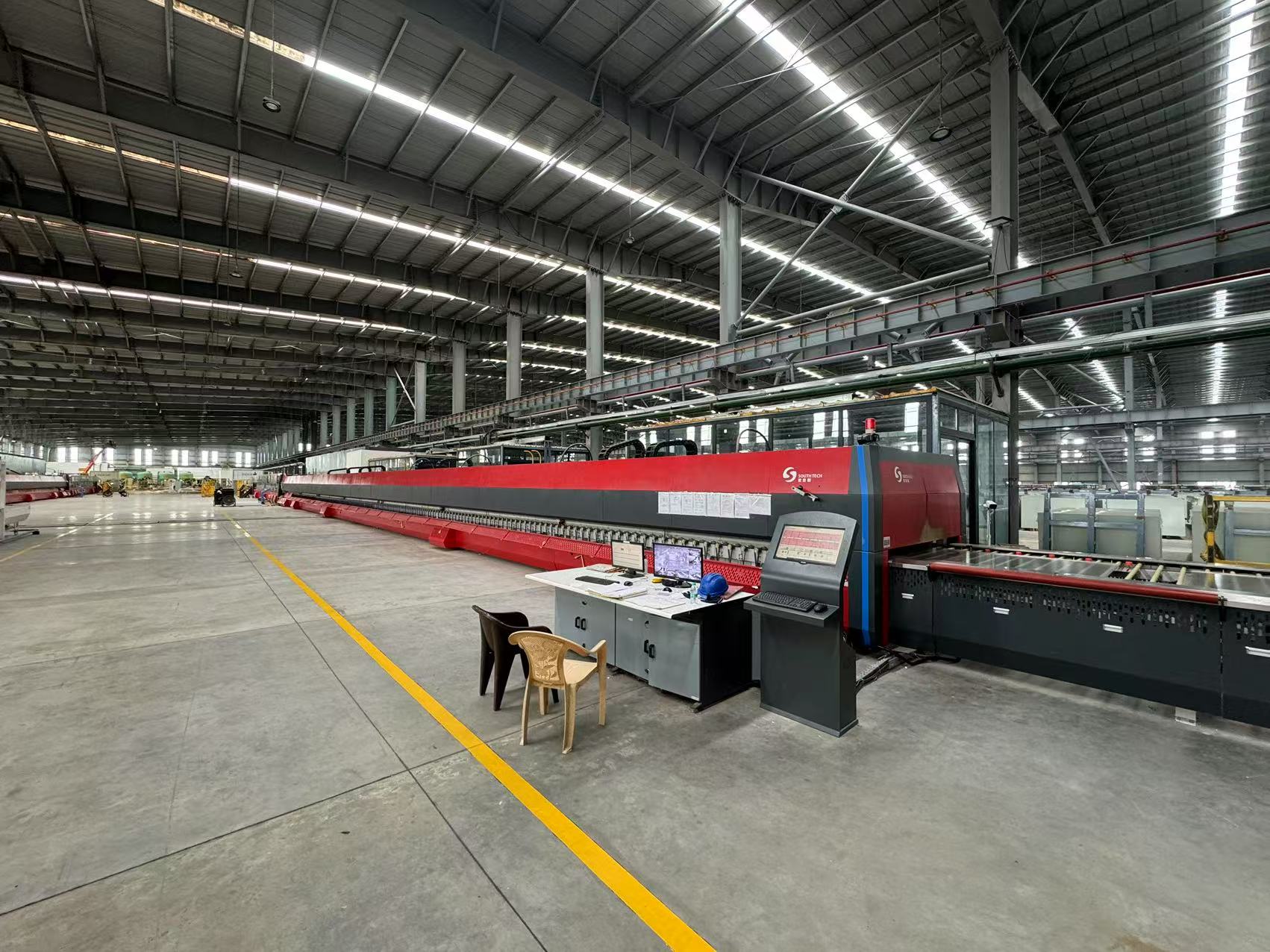
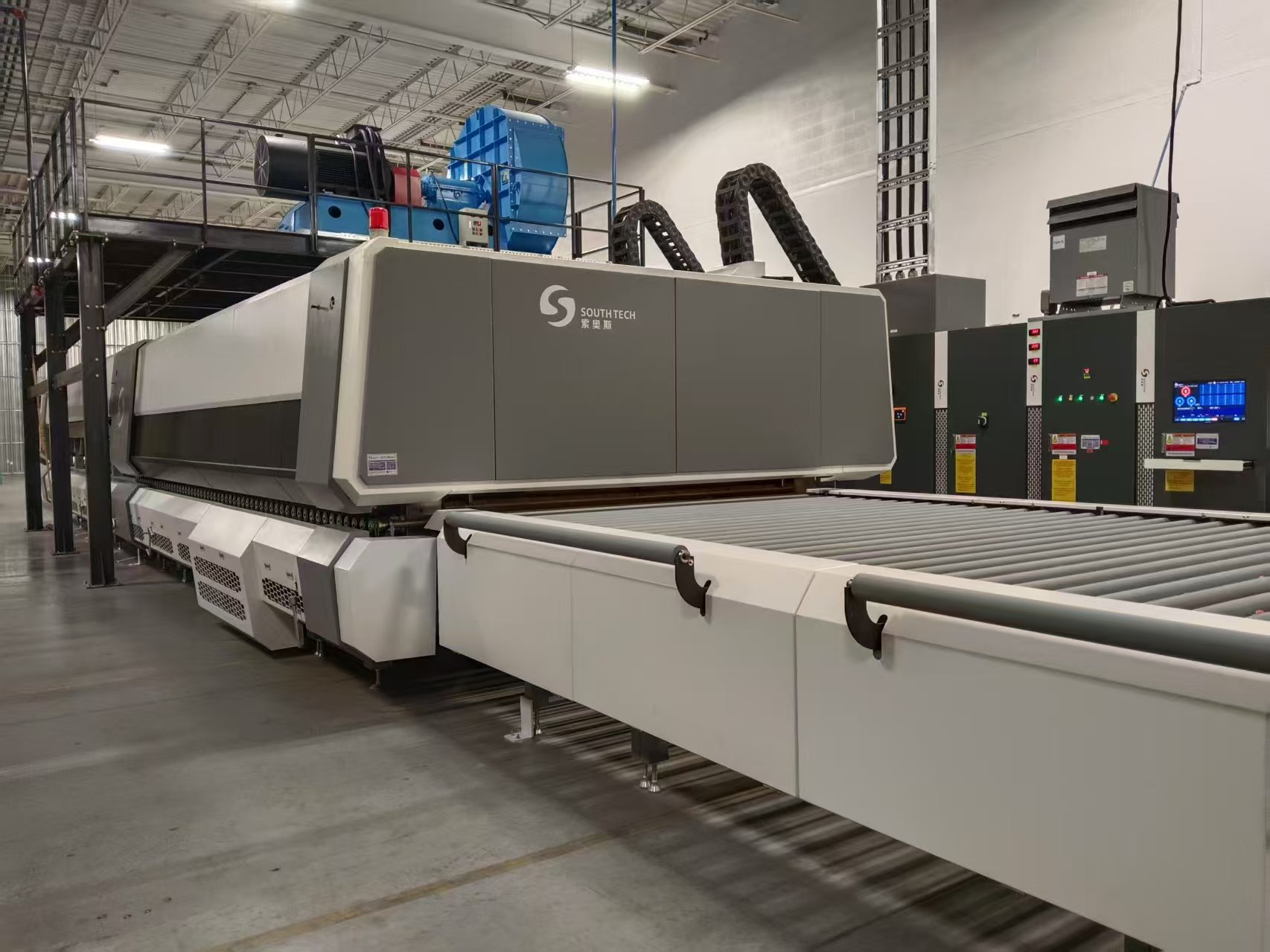
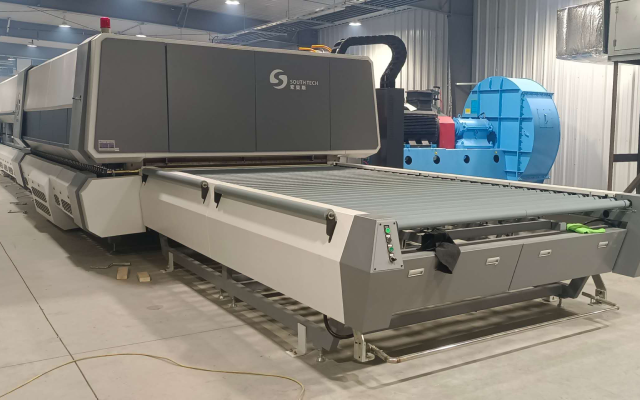
High-Flatness Low-Distortion Tempering for Jumbo & Thick Glass

With four unique convection‑system configurations, our technology delivers balanced thermal energy and ultra‑precise temperature control to resolve warping/deformation of ultra‑long thick glass from temperature gradients. Its innovative discrete uniform wind‑pressure design cuts cooling distortion and stress spots (anisotropy). Full‑cycle shape control from heating to quenching meets strict large‑size and high‑optical‑quality demands for premium architectural curtain‑wall production.
Types of Glass

  • 1-Building-Curtain-Wall

    Building-Curtain-Wall

  • 2-Residential -Exterior-Window

    Residential-Exterior-Window

  • 3-Glass-Skylight

    Glass-Skylight

  • 4-Glass-Balustrade

    Glass-Balustrade

  • 5-Glass-Partition

    Glass-Partition

  • 6-Structural-Glasswork

    Structural-Glasswork

FAQ

  • Tempered glass features high strength, 3 to 5 times that of standard glass, enabling excellent resistance to impact and deformation. It delivers superior safety, breaking into tiny fragments without sharp edges upon damage, and boasts outstanding thermal stability. It serves as the core raw material for manufacturing safety architectural glass and heat-resistant home appliance glass.

  • Absolutely, and it is the preferred base glass for IGUs. Its benefits are as follows:

    1. Higher safety: If one side of the insulated glass breaks, the tempered layer provides reliable safety protection.
    2. Enhanced structural strength: It improves the overall wind load resistance and anti-deformation performance of the insulated glass.
    3. Improved durability: The high mechanical strength of tempered glass reduces breakage risks caused by uneven stress during transportation, installation and service.
    4. Better airtightness for gas-filled IGUs: Tempered glass has minimal deformation, which helps maintain the tightness of the insulated cavity and prolong the retention rate of inert gases such as argon.
  • On-line Low-E glass: Its coating film is hard, allowing storage, cutting and tempering just like ordinary glass with flexible processing workflows. However, it offers average energy efficiency (especially solar heat gain coefficient) and limited color options. Off-line Low-E glass: It delivers superior energy-saving performance and diverse aesthetic colors, yet its coating film is soft. It must be tempered after cutting and edge grinding. In addition, the tempered off-line Low-E glass needs to be assembled into insulated glass units promptly after tempering to prevent coating oxidation.

    Processing sequence for off-line Low-E glass: Raw glass cutting → edge grinding → cleaning → coating → tempering → IGU assembly. Southtech tempering furnaces can efficiently temper Low-E glass with an emissivity (e) of no more than 0.01.

Made With Heart Safe To Use

Contact Us