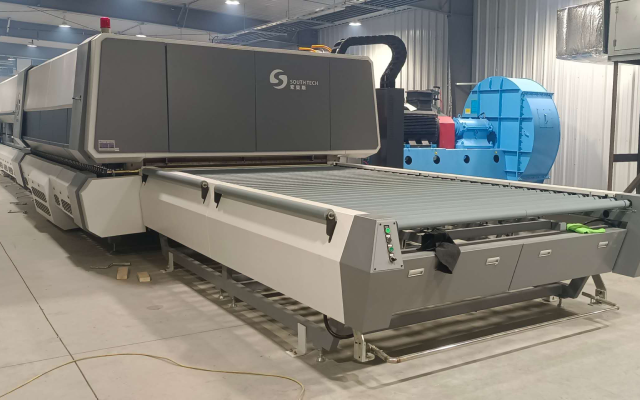
Rollers to minimize straight edges

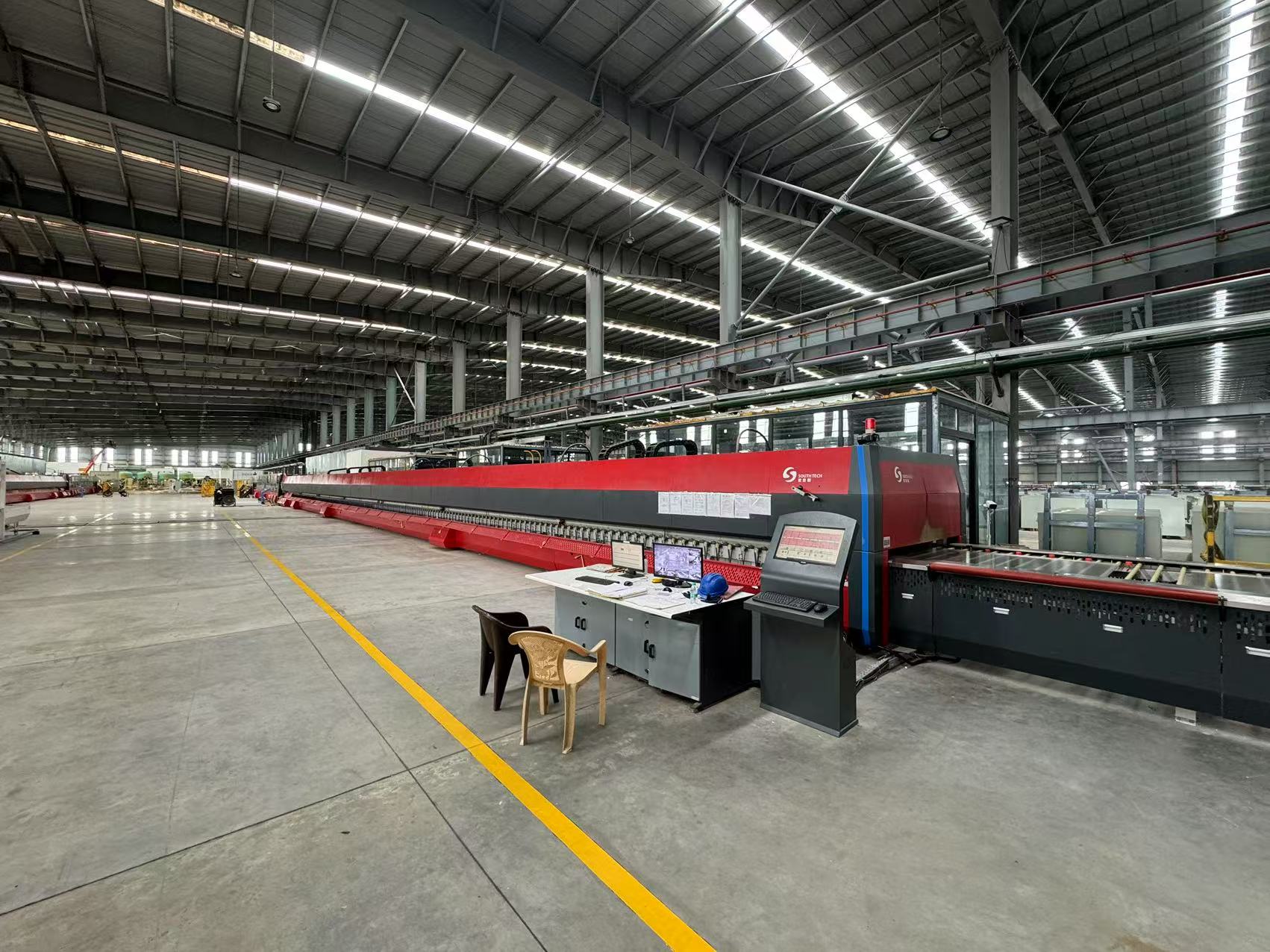
Delivering a turnkey automotive glass tempering solution, we fully satisfy the stringent quality and inspection standards of global automakers.

From optical clarity to safety fragmentation, our technology complies with international safety regulations, including ECE R43, ensuring reliable mass production for automotive safety glass.

Types of Glass

  • E1

    Panoramic Sunroof

  • E2

    Rear Window of Car

  • E3

    Armored Vehicle Observation Window

  • E4

    Car Side Window

  • E5

    Rearview Mirror

  • E6

    Bulletproof Glass For Cars

FAQ

  • Printing must be completed prior to tempering. Ceramic ink for glass requires sintering at high temperatures (usually over 600°C) inside the tempering furnace to achieve permanent curing, resulting in a hard, wear-resistant and corrosion-resistant finish. Therefore, the printing procedure must be finished before glass tempering, and the tempering process doubles as the ink sintering process.

  • Tempered glass features high strength, 3 to 5 times that of standard glass, enabling excellent resistance to impact and deformation. It delivers superior safety, breaking into tiny fragments without sharp edges upon damage, and boasts outstanding thermal stability. It serves as the core raw material for manufacturing safety architectural glass and heat-resistant home appliance glass.

  • Absolutely, and it is the preferred base glass for IGUs. Its benefits are as follows:

    1. Higher safety: If one side of the insulated glass breaks, the tempered layer provides reliable safety protection.
    2. Enhanced structural strength: It improves the overall wind load resistance and anti-deformation performance of the insulated glass.
    3. Improved durability: The high mechanical strength of tempered glass reduces breakage risks caused by uneven stress during transportation, installation and service.
    4. Better airtightness for gas-filled IGUs: Tempered glass has minimal deformation, which helps maintain the tightness of the insulated cavity and prolong the retention rate of inert gases such as argon.
  • On-line Low-E glass: Its coating film is hard, allowing storage, cutting and tempering just like ordinary glass with flexible processing workflows. However, it offers average energy efficiency (especially solar heat gain coefficient) and limited color options. Off-line Low-E glass: It delivers superior energy-saving performance and diverse aesthetic colors, yet its coating film is soft. It must be tempered after cutting and edge grinding. In addition, the tempered off-line Low-E glass needs to be assembled into insulated glass units promptly after tempering to prevent coating oxidation.

    Processing sequence for off-line Low-E glass: Raw glass cutting → edge grinding → cleaning → coating → tempering → IGU assembly. Southtech tempering furnaces can efficiently temper Low-E glass with an emissivity (e) of no more than 0.01.

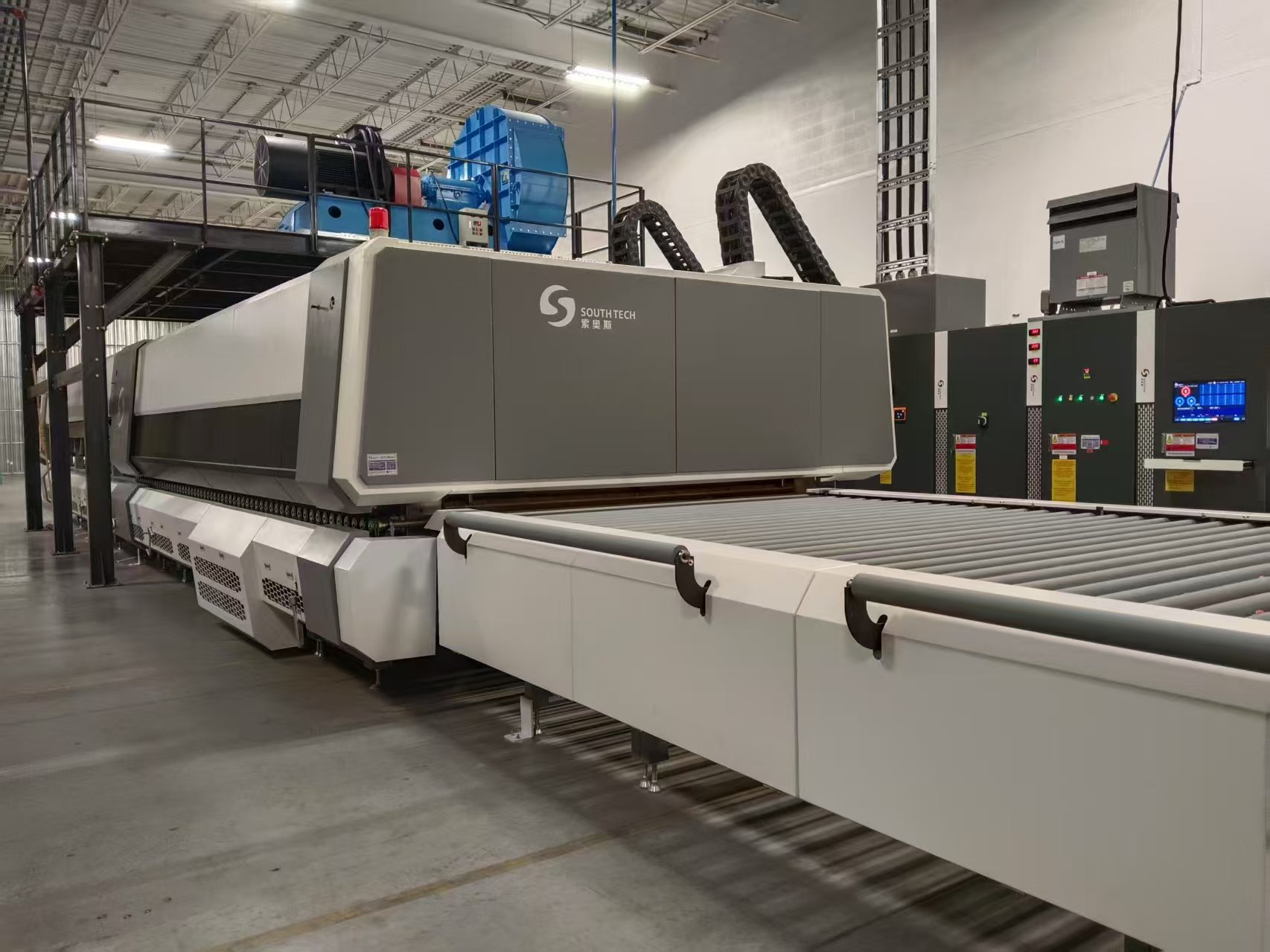
  • A sunroof is a movable component. When tempered glass breaks, it crumbles into granular pieces free of sharp angles, which effectively prevents vehicle occupants from being cut or struck by large glass shards.

  • This is determined by both safety regulations and functional requirements. Windshields must stop occupants’ heads from being thrown out in collisions and retain partial visibility after breaking, hence laminated glass is used. Side and rear windshields need to be breakable to create escape access for rescue operations while avoiding flying sharp fragments, so tempered glass is the mainstream choice. Nevertheless, some high-end vehicles equip side windows with laminated or tempered-laminated glass to boost safety (penetration resistance, anti-theft performance) and sound insulation.

  • Tempering must be completed prior to edge encapsulation (typically plastic injection molding). Plastics cannot withstand the ultra-high temperatures inside tempering furnaces. After tempering, the cleanliness, surface temperature and primer coating treatment of glass edges are critical factors that directly affect the adhesion and sealing performance of subsequent injection-molded encapsulation.

Made With Heart Safe To Use

Contact Us